

As I approached my 54th birthday, I found myself rather overweight and unfit. I was regularly experiencing pain in my hips and knees. I began to realise that if I wanted to avoid more serious problems later in life, I needed to take some action. But what?
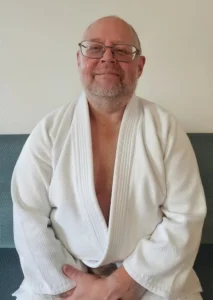
Several of my friends were into boxing and karate. Getting punched in the face? Not my idea of fun. I was aware of Aikido, having tried it for a few months as a junior. However, when my father stopped going, I stopped too. So, why not give it another try? A quick Google search for clubs near me soon taught me that there were several different “flavours” of Aikido. One that caught my eye was Ki Aikido. So, what is this, and how is it different?
There are several articles on the internet (not least on this website), so I won’t delve too deeply into it here. Suffice it to say that ki is often defined as “life force” or “spirit”. It’s a subject that has always fascinated me, although, being a scientist, I approach it with a healthy degree of scepticism. Nevertheless, I was intrigued. My next step was to contact my local club and explain that I was interested in starting but was concerned about my age and physical condition. I was invited to attend a class as an observer to see what went on and whether it was something I’d like to try. I did just that, along with a friend whom I persuaded to come with me. We were both made to feel very welcome, and every question we had was answered. By the end of the evening, we’d both decided it was something we wanted to pursue.
I must admit it was with some trepidation that I presented myself the following week, dressed in light sports clothing, paid my membership (which includes insurance) and class fees, and stepped onto the mat for my very first lesson. I needn’t have worried. The other students—a mix of ages, sexes, and abilities—all made us feel welcome, and the instructor (given the Japanese title Sensei, meaning “teacher”) reassured us that we didn’t have to—and shouldn’t—do anything we weren’t comfortable with. The lesson began with warm-up exercises and some Ki exercises. We were shown several Ki principles, such as the unbendable arm. This stuff really works! Whether it’s physical, mental, or spiritual, I’m still not entirely sure, but one thing is certain: I’m looking forward to developing my understanding of its principles and practices.
Then it was time to break for tea. Tea obviously plays an important role in Japanese culture; here, it gives us a chance to catch our breath and, perhaps most importantly, enjoy some social interaction with the Sensei and the other students away from the business of the mat.
Then came the Aikido. Once again, it was emphasised that we shouldn’t do anything we were uncomfortable with and that it wasn’t necessary to throw each other onto the mat all the time. When paired with more experienced students, we were shown nothing but patience, encouragement, and kindness. There was no “teaching the new guy a lesson”. In fact, respect for your training partner is one of the fundamental principles of Aikido.
I left that evening feeling enthusiastic and looking forward to my next lesson.
In addition to the regular weekly classes, there are also several seminars and specialist courses held throughout the year. In fact, at the time of writing, we have a special “No Falls” course coming up for those who are less mobile. These events provide an opportunity to meet and train with members and teachers from other clubs within the federation.
I am now looking forward to my first grading—more nerves! But my Sensei says I’m ready, and I trust his judgement, so I suppose I am. Wish me luck!
To conclude, if you’re at all curious but worried that you may not be able to keep up, get in touch. Come and watch, and perhaps even give it a go. You just might discover an enjoyable new pastime that’s beneficial to mind, body, and spirit, while making some new friends along the way.
Although I’m still very much a beginner, I’m already noticing subtle changes. I stand a little straighter, move with a little more confidence, and carry myself differently in everyday life. My balance and coordination are improving, and I find myself approaching challenges with a calmer, more positive mindset. These aren’t dramatic transformations, but they’re real, and they encourage me to keep coming back to learn more.
And that can’t be bad.
Neil Sverdloff
Headquarters club