

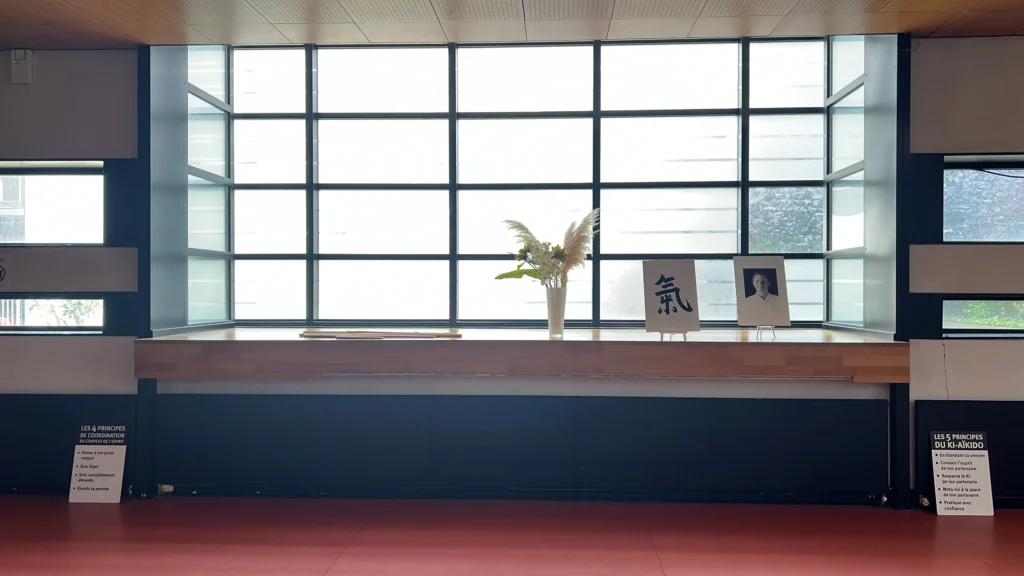
What is a “Third Place”?
The book The Great Good Place by Ray Oldenburg (co-authored by Karen Christensen), defines a person’s “first place” as the home and the people they live with, while a person’s “second place” would be the workplace which, for many of us nowadays, may also be the home as remote jobs become more commonplace. A “third place” then, is a public space that people frequently visit, where one might encounter familiar faces and meet new friends. They are considered “anchors” of a given community.
Oldenburg and Christensen identified seven characteristics of third places, each with a brief definition included. In this article, I will take each in turn and describe – in my humble opinion! – why the Ki Aikido Dojo fits the definition or, as the case may be, where it differs. Typical examples of third places include cafés, pubs and libraries, so the Dojo is far from the perfect example of a third place.
Even so, I will break down the criteria and state my case for the Ki Aikido Dojo!
The seven characteristics are:
- Open and inviting
- Comfortable and informal
- Convenient
- Unpretentious
- There are regulars
- Conversation is the main activity
- Laughter is frequent
Characteristics
Open and inviting
“You don’t need an invitation or appointment, and you can come and go as you please.”
This one I’d say is half-true. Whilst new members are always welcome to stop by a class, there is some admin to complete before first stepping onto the mat. There is also a set class-time, so its not recommended to come and go as you please!
On the inviting front though, the Ki Federation’s commitment to inclusivity certainly hits the mark here. With no physical barriers to practice, and each class being tailored to those that are participating, the Dojo is one of the most welcoming places that I’ve ever encountered.
Comfortable and informal
“You feel that you belong there.”
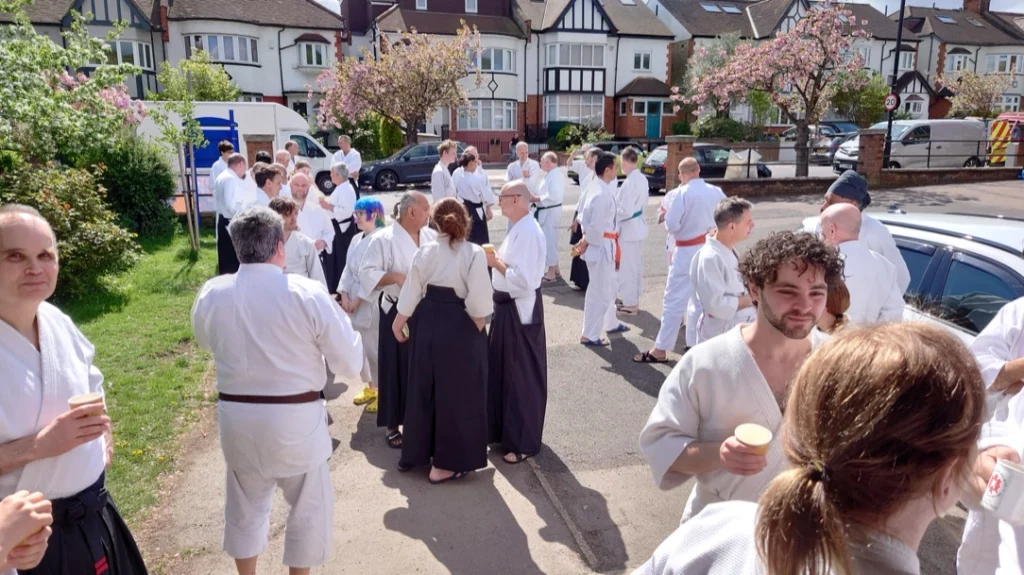
Again I would have to say half-true. There is etiquette and respect that is non-negotiable in the Dojo giving an air of formality to proceedings. It is also true that the practice of Ki Aikido will often take you out of your comfort zone, though this is by design, and encouraged. It can also be said that the structure and formality of the practice provide a safe space in which people can have the comfort to do things that would otherwise be uncomfortable. When it comes to belonging, I have to be biased and say that that box is checked! We have seen many testimonials from people who have searched – often for many years – to find a place like Ki Aikido that makes them feel welcome and gives them the benefits that our practice bestows.
Convenient
This one is individual, though I’m aware of several people who will travel for miles and hours to reach their nearest Dojo. Whilst we currently boast over thirty-five clubs across the UK – as well as our international branches – it’s possible that we are not in your area as there is quite a distance between Glasgow and Shrewsbury! As our practitioners advance and, with modern life being the way it is, move away from their hometown, we are always encouraging those that can to start up their own clubs. As we continue to grow as a federation, hopefully we can become more convenient for all those that wish to practice.
Unpretentious
“Everyone is on the same level, there’s nothing fancy or fragile, and it’s not expensive.”
As someone who has participated in many sports and been a member of many sports clubs over the years, I can say from first-hand experience that Ki Aikido is one of the more cost friendly activities.
As for being on the same level, this is not strictly true in the sense of the grading system, but everyone is treated as an equal on the mat and is given the same respect. It is also true that senior members still enjoy practicing the basics and working with beginners as peers. I wouldn’t personally say there is anything fancy or pretentious about the Dojo or the practice, but perhaps the eye of an outsider may disagree. From the formal attire of the Hakama to the free-flowing and seemingly complex movements, there are elements that could be described as “fancy.” When it comes to fragility, I’ll try not to pass comment on our practitioners!

There are regulars
“And often, there’s a host who greets people as they arrive.”
The phrase, “part of the furniture” comes to mind when I picture a Ki Aikido practice, or any of our courses throughout the year. There are certainly regulars! I would also argue that the Sensei acts as a host, though most clubs will have a friendly regular who often takes over greeting responsibilities.
Conversation is the main activity
“Discussion, debate and gossip are part of the mix.”
For this one, you may have to allow me some poetic licence. Whilst actual, spoken conversation may be minimal on the mat, to my mind, every exercise in Ki Aikido is a conversation between the Nage and the Uke. Where the Nage is speaking (leading) and the Uke is listening (following). In this spirit, we are engaged in conversation whenever we extend our minds, and project our Ki towards our partners in the Dojo. As for gossip, perhaps there is some tea spilled in the changing room before or after practice but I would hope the Dojo is kept safe from such chatter.
Laughter is frequent

“The mood is light-hearted and playful. Joking and witty banter are encouraged.”
Again, if I could take some poetic licence here and replace “laughter” with “joy” then I would say that the Ki Aikido Dojo certainly hits the mark here. Whilst there are points of frustration, as there are in any vocation as we learn and grow, the joy of Ki Aikido is evident in the energy of the Dojo during practice.
Why third places matter
Third places have always held an important role in our societies, allowing those in the community a safe space to unwind and relax, away from work and away from the home. In the modern, fast-paced world, with distractions around every corner, and technology invading every aspect of our lives, taking time away from it all and engaging with other people in a meaningful and enjoyable way, becomes all the more imperative. Far from being a luxury, it’s becoming a necessity and, hopefully, I have successfully made the case for the Ki Aikido Dojo as an effective third place.
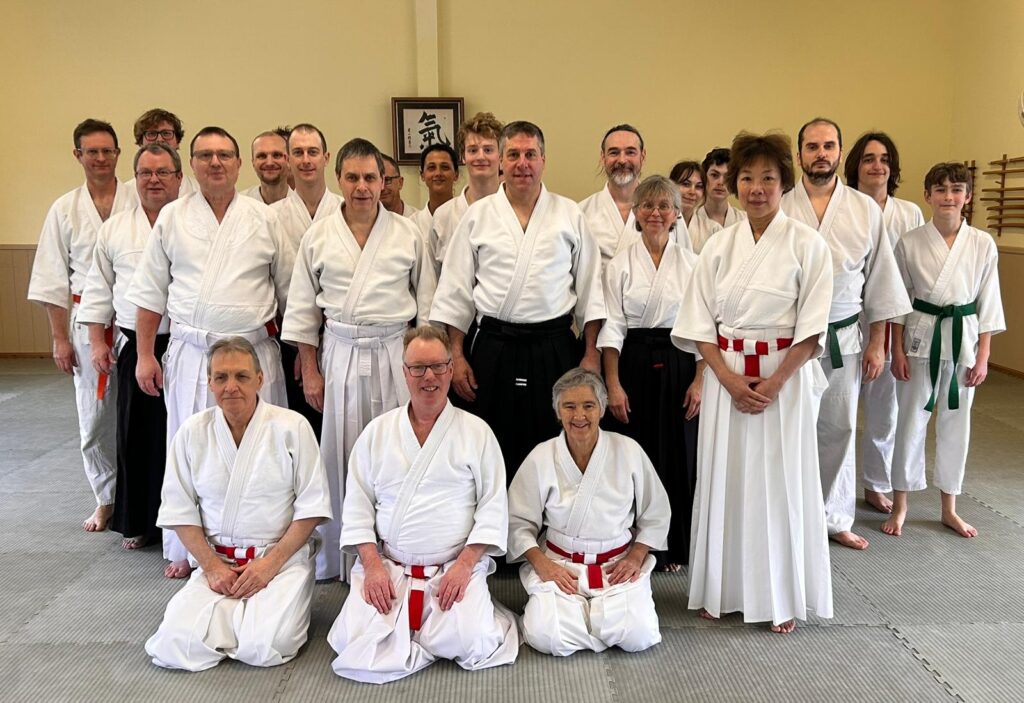
Would you like the Ki Aikido Dojo to be your third place?
Ben Docherty
Edinburgh Ki Aikido Club